

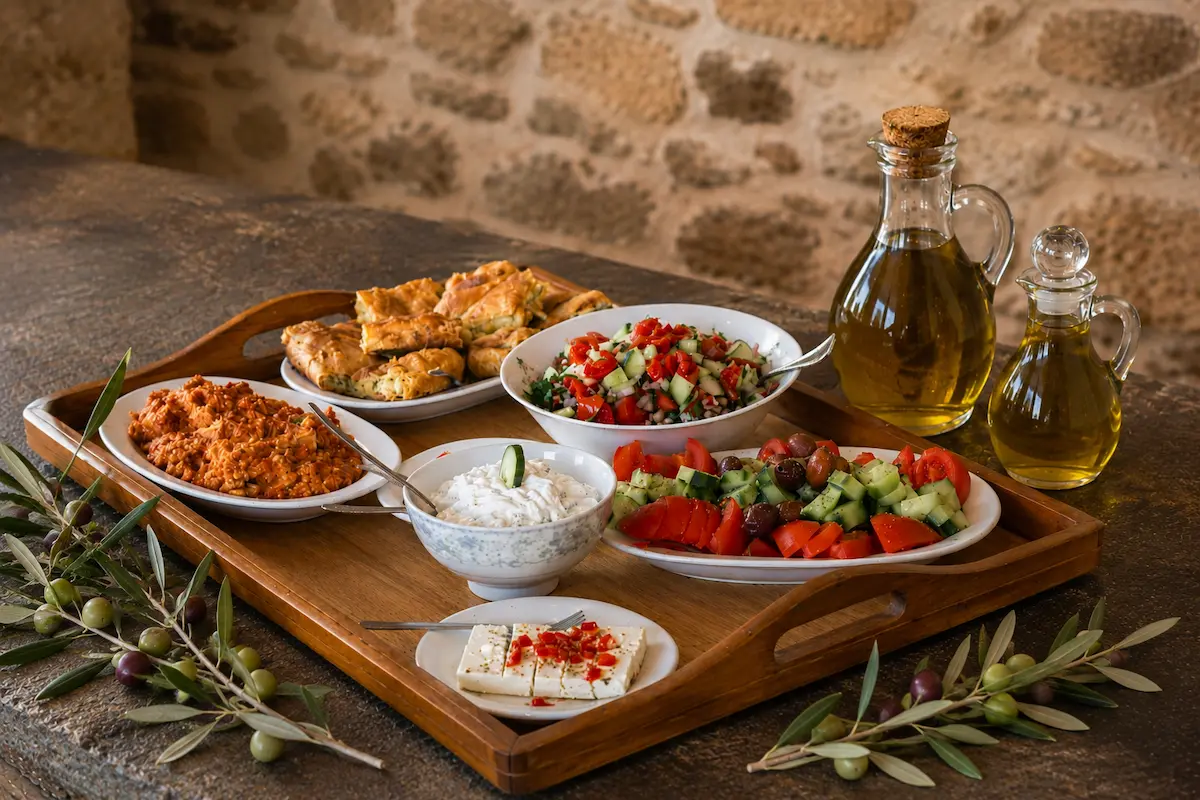
Messinia, the region of the Peloponnese that includes Kardamyli, produces around half of all Greek olive oil. The olive groves are not background scenery here. They are the working agricultural infrastructure of the region. Most Mani families own a few terraces of trees. Many of those trees have been in the same family for three or four generations.
The October-into-November olive harvest is the most consequential moment of the agricultural calendar, and it is the only time of year when a visitor can taste new oil within hours of it being pressed.
This is a complete guide to spending the olive harvest in Mani as a visitor. Discover when the olive harvest happens, what to expect on the trees, where to stay, how to taste new oil properly, and the operators who run immersive experiences during the olive harvest Greece season.
The Two Olives of Messinia: Cultivars and the Olive Harvest
Koroneiki, the Oil: Olive Harvest Standard
Koroneiki is the dominant cultivar of Mani and the cultivar pressed for almost all premium Messinian olive oil. The fruit is small and hard, prized for its oil yield (~20 percent by weight) and its character: robust, peppery, with green-banana, artichoke, and green-pepper notes, and a high polyphenol content that produces the characteristic throat-catch (oleocanthal). Early-harvest Koroneiki, agourelaio, is the most prized and the rarest; it is pressed from olives picked green, before they ripen fully, and yields less oil but more intense flavour.
Harvest timing: traditional Koroneiki harvest begins in the third week of October and runs into mid November. Hand-raking is still common on the small terraced groves; mechanical harvesting on larger estates. Pressing happens within 24 hours of picking to preserve quality.
Kalamata table olive, the eating olive
The Kalamata olive (Kalamon cultivar) is the iconic large purple-black table olive of the region, with PDO protection (since 1996) that restricts farming and processing to the Messinia prefecture. Kalamon olives are picked fully ripe between November and January, never pressed for oil, and brine-cured with wine vinegar. Important clarification: “Kalamata olive oil” is a PDO product, but the oil itself is pressed from Koroneiki, not from the Kalamon table cultivar. Same region; different products; different cultivars.
What Olive Harvest Week Looks Like at Villa Leonidas
The Villa Leonidas estate is itself a working Koroneiki olive oil grove. The terraces around the main house and the cottage are productive, and some of the income from each stay’s nightly rate is reinvested directly into the trees and the stone terraces they sit on. During the olive harvest, the activity is visible from any of the properties:
- Nets go down beneath each tree to catch the falling olives.
- Hand-rakes or shaking sticks are used to bring the fruit off the branches.
- Olives are gathered, sorted, and sacked the same day.
- Sacks are taken to a local mill (Mani has several active mills within 30 minutes) and pressed within 24 hours.
- First-press oil comes back to the estate that evening, dark green, cloudy, and at its absolute peak.
How to Taste Fresh Olive Harvest Oil Properly
To truly appreciate the fruits of the Kardamyli olive harvest, use the professional five-step tasting method:
- Pour a tablespoon of oil into a small dark glass.
- Warm the glass between your hands for 30 seconds. Aroma releases at body temperature.
- Inhale through the glass. Look for green-banana, artichoke, fresh-cut grass, green tomato leaf.
- Take a small sip. Hold on the front of the tongue.
- Inhale air across the oil through your teeth. The throat-catch (oleocanthal) is the polyphenol signal of authentic high-quality fresh oil. It should make you cough lightly.
Pairing the new oil with Sfela cheese (Mani’s PDO sheep-and-goat cheese, sharp and salty) is the canonical local experience. Grill the Sfela until it chars at the edges, then drizzle new oil over the top. Eat with bread.

Operators who run olive harvest experiences
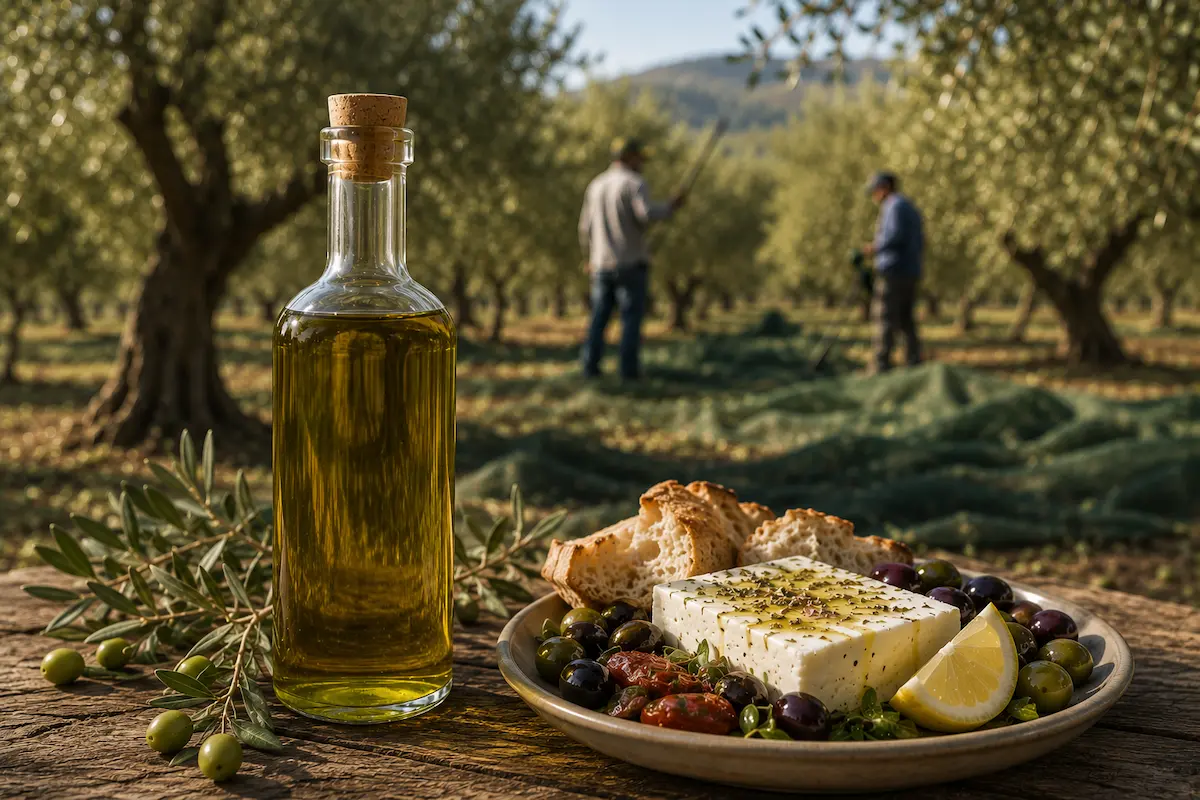
The Olive Routes is the established operator for olive-harvest immersions in the Peloponnese. Three to seven night packages include grove visits, hand-raking sessions, mill tours, pressing visits, oil tastings, and meals built around new oil. They run multiple departures through October and November.
- Ben Olive Mill (Kardamyli area). Mill tours and pressings open to visitors during harvest. Confirm dates at check-in.
- Mandarin Oriental Costa Navarino (further north in Messinia, ~1 hour drive). Their family olive-harvest experience is documented and bookable.
- Local mills near Kardamyli will often host curious visitors at the pressing for an hour, by quiet arrangement. Ask Michael at check-in if you would like an introduction.
A Typical Olive Harvest Day at Villa Leonidas
- Morning. Walk down to the bakery for fresh tiropita and coffee. Watch the nets go down in a nearby grove on the walk back.
- Late morning. Drive to Foneas or Delfini for one last warm swim (sea is still around 21 to 22 °C in late October).
- Lunch. Garden table at the cottage. New oil on bread, Sfela, tomato, a glass of Mantinia Moschofilero from the village wine shop.
- Afternoon. Visit a mill in operation. Watch the pressing. Buy a litre of new oil straight from the source.
- Late afternoon. A walk through Old Kardamyli or the lower Viros Gorge to clear the head.
- Evening. Dinner at Lela’s or Dioskouri. Or cook at the estate with the day’s new oil.
Where to Stay for Your Autumn Olive Harvest Stay Peloponnese Trip
All three Villa Leonidas options work for an October or November harvest stay. Achilles Cottage is the right choice for a couple or small family on a quiet harvest week. The Main Villa is the right choice for a family of four to six who want pool access through late October’s warm days. Villa + Guest House is the right choice for a multi-generational group on a longer harvest stay.
The 28-plus-night long-stay discount is the move for harvest. Forty percent off the nightly rate, on top of an already lower shoulder-season base rate. A November stay of four weeks at the cottage works out at an effective per-night cost around €120, comparable to a serviced apartment in central Athens but in a working olive grove with the Gulf of Messenia in front of it.
Property manager Michael personally welcomes every arrival in Kardamyli, walks guests through their property at check-in, and is reachable by phone through the stay. He returns for check-out. Owners Leo and Cindy curate the experience and respond personally to every guest review.
What to buy and take home
- New-press Koroneiki oil. One or two litres in a dark glass bottle. Lasts six months sealed; six weeks opened.
- Sfela PDO cheese. Buy from the Kalamata Wednesday or Saturday market for the best selection.
- Taygetos thyme honey. Light amber, distinctive, the partner to Sfela.
- Syglino. Mani’s emblematic salt-cured smoked pork in its own rendered fat, smoked with lentisk or cedar.
- Loukaniko. Coarse pork sausage with bitter orange and fennel.
Customs notes vary by country. Most allow personal-use quantities of olive oil, cheese, and honey. Cured meats are stricter; check before flying.
Frequently asked questions
Can I help pick the olives?
Yes, by arrangement. Ask Michael at check-in. The estate is small and the family-run grove around the property has welcomed harvest-curious guests in past seasons. The Olive Routes runs formal multi-day harvest immersions if you want a structured experience.
When exactly does harvest start?
Koroneiki olive harvest typically begins between October 15 and November 1, varying by the year’s weather. Early-harvest agourelaio starts earlier (mid October in some years). Kalamata table olives are picked from November through January. Confirm the year’s exact start with Michael; the timing shifts by 7 to 14 days year to year.
Is the sea still warm in November?
Sea temperatures hold at around 21 to 22 °C through early November and drop into the high teens by month’s end. Late-October swimming is comfortable; mid-November is for the brave.
What is the difference between Kalamata olives and Kalamata olive oil?
They are different products from different cultivars. Kalamata table olives (the large purple-black eating olive) come from the Kalamon cultivar and are PDO-protected (since 1996). Kalamata olive oil (also PDO) is pressed from the Koroneiki cultivar. Same region; different products; same Kalamata name.
Will any tavernas be open?
Most of the main tavernas operate through November at reduced hours. Lela’s, Tikla, Dioskouri, and Taverna Kastro confirmed open through October at full hours. Some shift to weekend-only by mid November. Confirm with Michael at check-in.
The honest read
If you have an interest in food, agriculture, or olive oil at any depth, the October-to-November olive harvest in Mani is one of the most rewarding visits you can plan in the Mediterranean year. The estate sits in a working grove, the new oil is on the table by evening, the sea is still warm, the crowds have left, and the 40% long-stay discount makes the math reasonable. Travellers who come once for harvest often come back the year after.
Plan an olive harvest stay in October or November
All three Villa Leonidas properties qualify for the 40% direct-book discount on stays of 28 nights or more. Property manager Michael can introduce you to local mill operators and pressing visits during harvest week.