What to Eat in Kardamyli: Five Foods of the Mani Worth Building a Trip Around

Picture of David Golubev

David Golubev

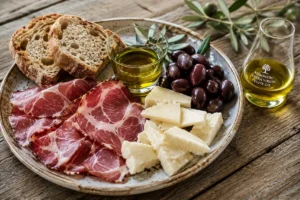
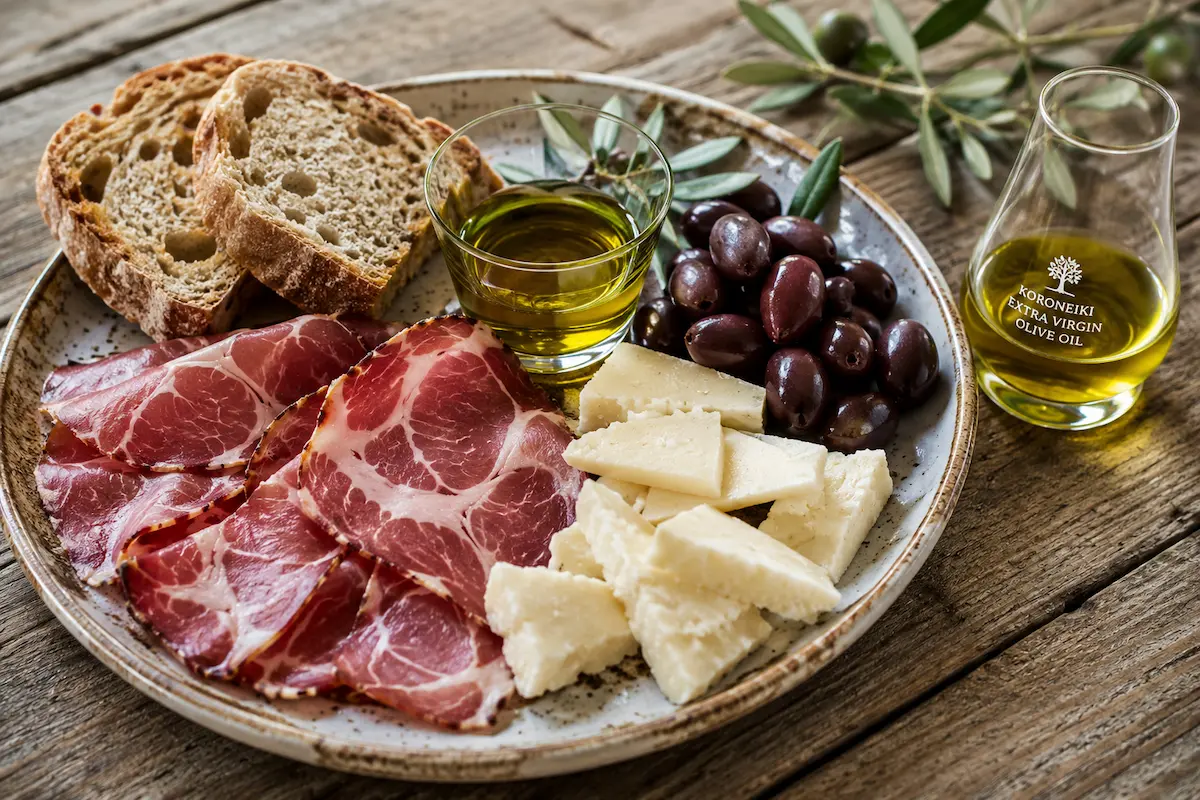
Mani meze plate with syglino, Sfela cheese, Kalamata olives, and Koroneiki oil displaying what to eat in Kardamyli
Table of Contents

People come to the Greek mainland for the food. They leave thinking they came for the food. If you are a culinary traveler trying to plan a culinary roadmap through the southern Peloponnese and wondering what to eat in Kardamyli, the rugged Mani peninsula offers the strongest case for a dedicated food journey.

Messinia, the region that frames our village, produces around half of Greece’s premium olive oil. Sfela cheese is exclusive to just two Greek prefectures. Taygetos honey is harvested directly off the wild slopes that shadow our stone houses. The historic Maniot smoking traditions go back to an era when meat had to survive long winters without a drop of electricity. None of this is generic. None of it tastes like the mass-produced souvlaki you ate in Athens last year.

This is a practical, localized guide detailing what to eat in Kardamyli to escape the tourist traps. If you want to know exactly what to eat in Kardamyli, focus your trip around these five authentic, regional ingredients, learning where they come from, how to order them, and where to source them like a local.

Your Practical Guide to What to Eat in Kardamyli

When analyzing what to eat in Kardamyli, mapping out the regional gastronomy requires looking at the raw geography behind the village. These five distinct elements form the absolute baseline of the local table and outline exactly what to eat in Kardamyli:

1. Syglino: The Mani’s Emblematic Smoked Pork

If you ask any village local what to eat in Kardamyli, syglino (also spelled siglino) is the food they will proudly tell you about before you even ask. Prime pork is deeply salt-cured, traditionally smoked over aromatic lentisk or cedar wood, and then preserved in its own rendered fat (known locally as glyna) scented with fresh orange rind.

The result is a dark, glistening, intensely smoky meat that remains rich without feeling heavy. The texture rests perfectly between a slow-cooked duck confit and a fine salt-cured ham, making it a mandatory milestone when discovering what to eat in Kardamyli.

How to Eat It properly

Tear the tender meat by hand over a clay plate. Eat it simply with crusty country bread and a glass of robust local red wine. Many traditional cooks fry small pieces of syglino in its own orange-scented fat and serve it over a bed of yellow split-pea purée (fava) or scramble it natively into eggs (kayianas). It is dense enough to serve as a main protein or as a savory side to wild greens, beans, and grilled summer vegetables.

Where to Find It

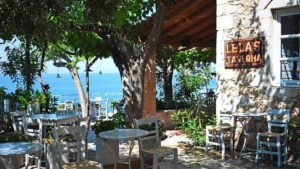
  • Lela’s Taverna: Serves it as an authentic, pan-fried starter right on the waterfront when it is available on the daily specials board.

  • Taverna Kastro (Old Kardamyli): Frequently integrates slow-simmered syglino into their traditional clay-pot baked dishes.

  • Kalamata Central Market: Buy it whole, vacuum-sealed for travel from the Wednesday or Saturday morning butcher stalls.

2. Sfela PDO: The Renowned Cheese of Fire

When researching what to eat in Kardamyli, cheese lovers must look beyond basic feta. Sfela (protected by a designated PDO since 1994) is a specialized semi-hard sheep-and-goat milk cheese cut into long strips, brine-aged for a minimum of three months, and kept exclusive to the Messinia and Laconia prefectures. Its regional nickname, the cheese of fire, references its sharp, heavily salted character.

The actual flavor profile is far more layered than a simple spicy kick: you get clean salt up front, a distinct citrus tang in the middle, and a rich, lingering sheep-milk creaminess once the initial bite settles.

How to Eat It properly

Grill the cheese on a flat top until the edges beautifully char, drizzle a pool of fresh Mani olive oil over the top, and eat it hot with ripe tomatoes and bread. That is the canonical local move when deciding what to eat in Kardamyli for an afternoon meze. Cold, Sfela pairs magnificently with crisp watermelon in late summer (the salt and sweet contrast is unforgettable) and with wild Taygetos thyme honey in autumn.

Where to Find It

  • Local Tavernas: Most village tavernas carry it; ask the server if it is on the day’s raw or grilled meze menu.

  • Village Supermarkets: The cheese counters in the main village markets stock block Sfela in brine.

  • Kalamata Central Market: Offers the deepest selection from artisan mountain producers across both prefectures.

3. Taygetos Wild Thyme Honey

The dramatic Taygetos massif rises directly behind our shoreline, peaking at a staggering 2,407 meters at Profitis Ilias. Its lower alpine slopes are blanketed in wild, uncultivated thyme, which blossoms into brilliant purple flowers every May and June. This unique microclimate heavily influences the seasonal framework of what to eat in Kardamyli.

Bees work these steep slopes intensively through the early summer months. The resulting raw honey is light amber, deeply thyme-forward, and completely unlike any clover or wildflower honey you would ever find on a standard supermarket shelf at home. The ancient Spartans drilled on these exact slopes; this thyme has remained genetically identical for two and a half thousand years.

How to Eat It properly

Spoon it generously over thick, strained Greek yogurt with crushed walnuts for breakfast or a clean dessert. It is also exceptional when drizzled directly over hot, grilled Sfela cheese to create the ultimate sweet-and-salty pairing. Alternatively, stir it into your morning Greek coffee instead of processed sugar, or enjoy it straight by the spoon as a natural digestif.

Where to Find It

  • Direct Producers: Small honey makers across the village sell jars directly from their doorsteps; ask Michael for a current harvest recommendation.

  • Kalamata Market: The central market remains the most consolidated source to sample various regional apiaries.

4. Loukaniko: The Mani-Style Citrus Sausage

Greek loukaniko exists in dozens of distinct regional variations, but if you are mapping out what to eat in Kardamyli, the Mani version stands completely apart. The local differentiator is a coarse-ground pork sausage blended heavily with bitter orange peel and wild fennel, giving it a vibrant citrus marker that you will not find anywhere else in Greece. Every surrounding mountain village guards its own specific recipe; some kitchens introduce sweet leeks, while others lean heavily into crushed red pepper.

How to Eat It properly

Grill or pan-fry the links until the casing becomes deeply browned and crisped, then slice it into bite-sized rounds. Serve it alongside sharp mustard, fresh bread, and a quartered lemon. A glass of cold, bone-dry Mantinia wine (a fragrant Peloponnesian Moschofilero white) cuts through the rich fats beautifully and complements your tracking of what to eat in Kardamyli.

Where to Find It

  • Lela’s Taverna & Gialos: Both seaside spots serve it hot on their shared meze platters.

  • Village Butchers: Hand-craft their own links weekly; availability shifts depending on the processing day.

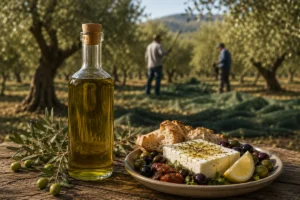
5. Protected Kalamata Olives and Mono-Cultivar Mani Olive Oil

When planning what to eat in Kardamyli, it is critical to separate these two distinct, world-class products, which are frequently confused by international travelers. Both anchor our regional gastronomy but utilize completely different olive varieties:

The Kalamata Table Olive (Kalamon Cultivar)

This is the iconic, large, purple-black eating olive that has been PDO-protected since 1996. Its cultivation is strictly restricted to the Messinia prefecture. These olives are fleshy, naturally brine-cured with red wine vinegar, and are never pressed for oil. They are hand-picked fully ripe between November and January and should be eaten as a standalone meze or tossed fresh into structural village salads.

The Mani Olive Oil (Koroneiki Cultivar)

The undisputed king of the Mani landscape is the small, hard Koroneiki olive, prized globally for its exceptional oil yield and distinct sensory character. Authentic Mani oil is robust, vibrant green, and bursting with peppery notes of green banana, tomato leaf, and wild artichoke. It contains a remarkably high polyphenol count that produces a characteristic, healthy scratchiness at the back of the throat (the oleocanthal marker).

Important Clarification: The famous PDO product labeled “Kalamata Olive Oil” is pressed entirely from these tiny Koroneiki olives, not from the large Kalamata table olives. For an incredible deep dive, The Olive Routes (located just 20 minutes from Kardamyli in historic Androusa) runs professional guided olive-mill tours and comparative Koroneiki tastings. Their immersive 3-hour Olive Harvest Tour in October and November is the absolute best hands-on introduction to our agricultural heritage.

5 Steps to Taste Extra Virgin Olive Oil Like a Professional

To truly understand what to eat in Kardamyli, you must learn how to evaluate fresh Koroneiki oil using the official international tasting framework:

  • Step 1 — Pour & Cover: Pour roughly one tablespoon of extra virgin olive oil into a small, dark glass and cover it with your hand to trap the volatile aromas.

  • Step 2 — Thermal Warming: Cup the base of the glass in your palms for 30 seconds, gently swirling it to warm the liquid and release the natural aromatic compounds.

  • Step 3 — Inhale Deeply: Bring the glass to your nose and uncover it. Take a deep breath and look for clear notes of fresh-cut grass, green tomato, or artichoke.

  • Step 4 — The Slurp (Strippaggio): Take a small sip, holding the oil on the front of your tongue. Draw air sharply across the oil through your teeth—this breaks the oil into a fine mist across your palate.

  • Step 5 — Track the Throat Catch: Swallow the oil. A high-quality, authentic Koroneiki oil will produce a distinct pepperiness or a sharp “catch” in your throat that should make you cough lightly. This is the definitive biological signal of health-boosting polyphenols.

Two Festive Pastries Worth Knowing About: Diples and Lalangia

If your search for what to eat in Kardamyli includes authentic sweets, seek out diples and lalangia. Diples are light, crisp sheets of fried dough folded into intricate ribbons and soaked in warm honey, while lalangia are golden, twisted loops of fried dough served crunchy with local walnuts and cinnamon. Both are deeply tied to Mani celebrations like weddings and Easter.

In the heart of the village, Noeas is the premier patisserie to satisfy your sweet tooth. Please note that Noeas is an artisan sweet shop, not a sit-down restaurant—do not attempt to order dinner here. Instead, stop by to pack a box of their exceptional almond cookies (amygdalota), honeyed baklava, threaded kantaifi, or creamy galaktoboureko.

The Perfect Wine Pairings for a Maniot Feast

The surrounding Peloponnese peninsula produces some of the most exciting indigenous wines in Europe. To complement your checklist of what to eat in Kardamyli, look for these three specific regional bottles on local wine lists:

  • Mantinia PDO (Moschofilero): A crisp, hyper-fragrant white wine grown in the cool high-altitudes of nearby Arcadia. Its natural acidity cuts through the fat of loukaniko and pairs beautifully with grilled fish or cold Sfela.

  • Nemea PDO (Agiorgitiko): A plush, complex, and softly tannic red wine sourced from the northeastern hills of the Peloponnese. It is the perfect structural match for smoked syglino, slow-roasted lamb, or grilled chops.

  • Laconia PGI (Kydonitsa or Monemvasia): Rare, elegant white varieties boasting distinct stone-fruit and quince notes that harmonize flawlessly with fresh seafood drizzled in raw olive oil.

A Practical 7-Day Kardamyli Food Itinerary

To experience the full spectrum of what to eat in Kardamyli without wasting a single meal, structure your vacation week around this field-tested culinary track:

  • Day 1 (Arrival): Settle into the village and walk down to Lela’s Taverna for a waterfront dinner. Order the house meze plate to sample authentic syglino and loukaniko right out of the gate.

  • Day 2 (Market Day): Spend your morning exploring the sprawling Kalamata Central Market (operating every Wednesday and Saturday). Stock up on artisanal Sfela blocks, vacuum-sealed smoked meats, and raw mountain honey to use throughout your stay.

  • Day 3 (Beachside Lunch): Head to Ritsa Beach and secure a shaded table at Gialos. Order the fresh catch of the day grilled over open coals and served with wild greens (horta) and cold-pressed Koroneiki oil.

  • Day 4 (Villa Meze Night): Gather your fresh ingredients from the Kalamata market and assemble a relaxed, private meze board at your accommodation paired with a chilled bottle of Moschofilero white.

  • Day 5 (The Olive Deep-Dive): Book a morning excursion with The Olive Routes for a half-day tour and oil tasting. If you are traveling during October or November, secure a slot on their interactive Olive Harvest Tour to fully master what to eat in Kardamyli.

  • Day 6 (Modern Interpretation): Secure a sunset table at Tikla, the village’s premier modern dining destination, to enjoy contemporary Peloponnesian culinary concepts.

  • Day 7 (Sweet Departures): Visit the counters at Noeas patisserie to pick up a fresh box of traditional galaktoboureko and amygdalota cookies to enjoy on your journey home.

Where to Stay if Food Is the Reason You Travel

If discovering what to eat in Kardamyli is the primary driver of your holiday, Achilles Cottage serves as the perfect operational base. The property sits within easy, flat walking distance to Lela’s, Gialos, Tikla, the local village bakery, the organic supermarkets, and Noeas patisserie. The cottage features a fully equipped kitchen engineered for preparing your fresh Kalamata market finds, alongside an idyllic garden table designed for slow, shaded outdoor dining. Direct bookings of seven nights or more automatically receive a free seventh night, and the property offers a substantial 40% long-stay discount for bookings of 28+ nights during the traditional autumn olive-harvest months.

Our local property manager, Michael, personally welcomes every guest upon arrival in Kardamyli, conducts a thorough walkthrough of the cottage at check-in, and can introduce you directly to local olive mills, independent cheesemakers, and honey apiaries by name. He returns to manage your checkout smoothly. The entire experience is personally curated by the owners, Leo and Cindy, who respond directly to every guest review to ensure an authentic stay.

Frequently Asked Questions

Q: Can international travelers safely pack local olive oil and cheese in their luggage?
A: Most international customs regulations permit personal-use quantities of extra virgin olive oil, hard cheeses (like aged Sfela), and honey within your checked luggage. However, cured or smoked meats like syglino and loukaniko face strict agricultural import bans in countries like the United States. Always ask vendors at the Kalamata market to vacuum-seal your items securely for transit when auditing what to eat in Kardamyli.

Q: Are there formal, year-round cooking classes operating within Kardamyli?
A: There is no permanently listed, brick-and-mortar cooking school operating inside the village borders. However, our property manager, Michael, can frequently coordinate private, in-villa culinary sessions with an expert local home cook by request. Additionally, The Olive Routes in nearby Androusa delivers world-class, olive-focused culinary experiences within an easy driving range for those seeking ideas on what to eat in Kardamyli.

Q: What options exist when looking for what to eat in Kardamyli as a vegetarian or vegan?
A: The local culinary landscape is exceptionally friendly for vegetarian and vegan travelers. Traditional Greek tavernas feature a deep repository of naturally plant-based dishes known as ladera (cooked in pure olive oil). Excellent cheese-free options include stuffed tomatoes (gemista), giant baked beans (gigantes), summer vegetable ratatouille (briam), steamed wild greens (horta), and herbed rice rolls (dolmades). Simply inform your server you want to eat nistisimo (fasting style) without dairy or eggs.

Q: Why should I focus my travel itinerary around what to eat in Kardamyli?
A: Crafting your trip around local ingredients gives you an authentic window into Maniot culture. The specific combination of wood-smoked syglino, sharp Sfela cheese, coarse loukaniko, and raw thyme honey creates a regional flavor profile that cannot be replicated elsewhere in Greece.

Q: If I visit during winter or off-season, how will that affect what to eat in Kardamyli?
A: While some seaside tavernas close from late October to April, the core regional ingredients remain central to the village diet. Local butchers still make citrus loukaniko, mills offer fresh cold-pressed Koroneiki oil, and neighborhood grocers slice block Sfela from brine all year long, ensuring you always know what to eat in Kardamyli regardless of the calendar month.

Q: Is it easy to find gluten-free choices when planning what to eat in Kardamyli?
A: Yes, finding gluten-free food is very straightforward. The core items like syglino smoked pork, grilled Sfela cheese, raw honey, and fresh seafood drizzled in Koroneiki oil are naturally gluten-free. Simply skip the bread basket and notify your server to prepare your meals cleanly when researching what to eat in Kardamyli.

Secure Your Kardamyli Culinary Journey

Ready to map out exactly what to eat in Kardamyli from your own private base? Achilles Cottage combines seamless walking access to our finest tavernas with a full kitchen designed for market-to-table cooking. Explore our direct booking calendar to lock in our exclusive free-7th-night promotion or our autumn long-stay harvest discounts today.

Plan a food-focused week at the cottage

Achilles Cottage walks to every taverna in the village, has a full kitchen for market cooking, and qualifies for the free-7th-night and 40% long-stay discounts on direct bookings.

→ Check Achilles Cottage availability.

New for 2026: Achilles Cottage

A private 2-bedroom stone cottage in Kardamyli, perfect for couples or small families seeking a quiet, independent stay near beaches and village life.

Book within 24 hours of your inquiry and enjoy 10% off when booking directly.